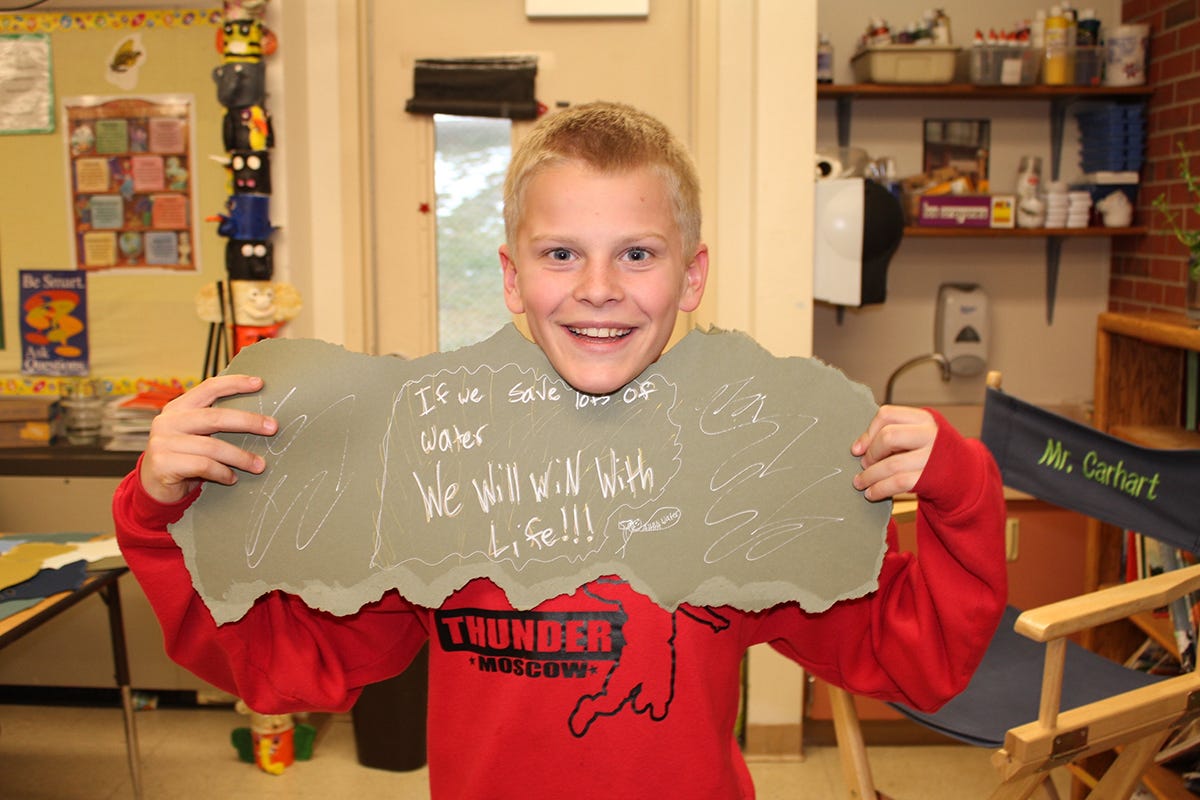
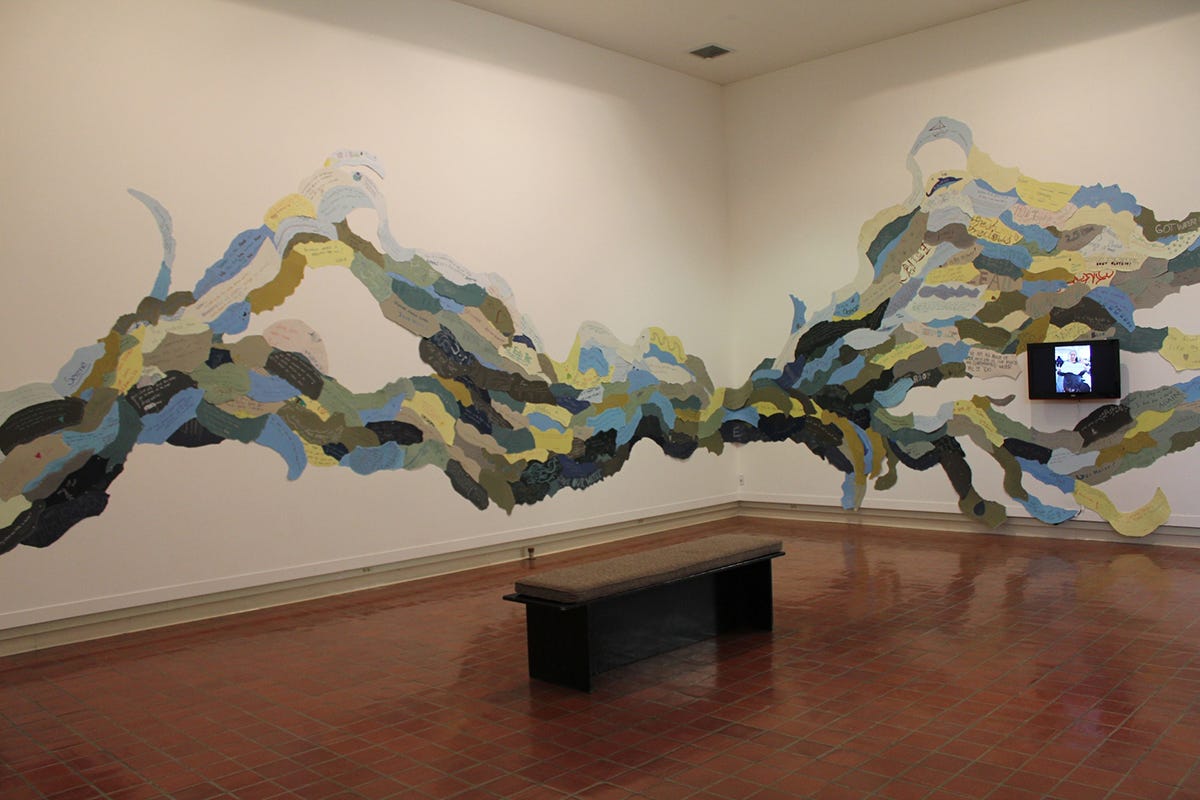
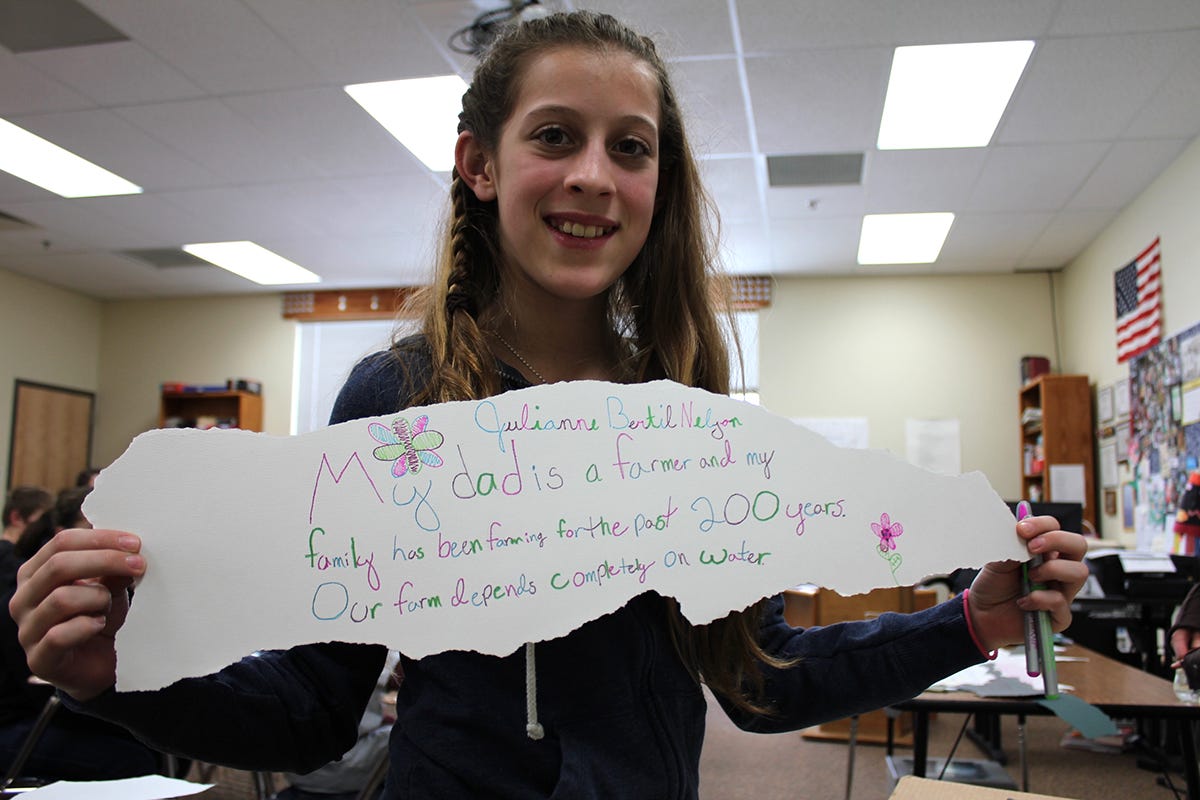
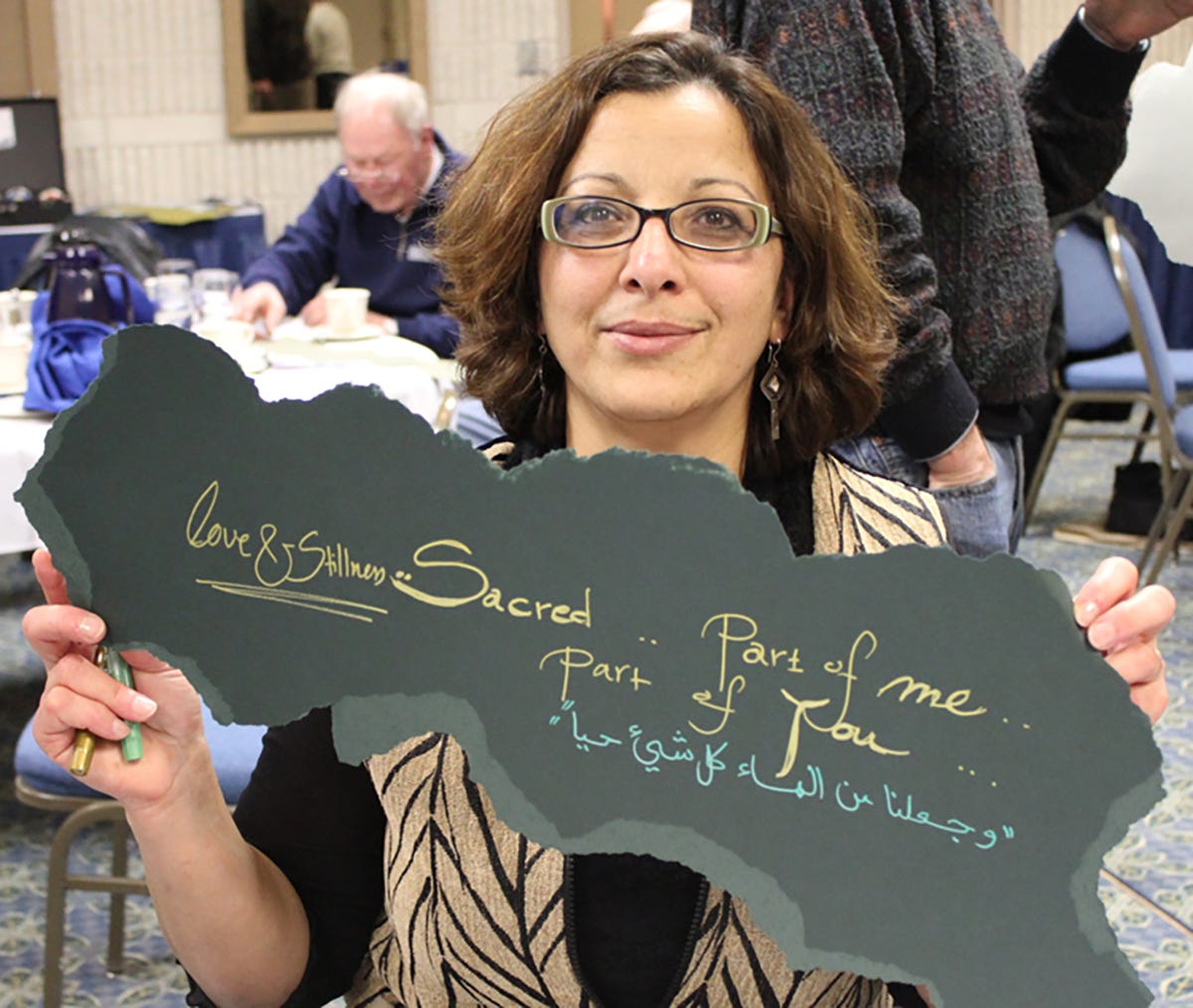
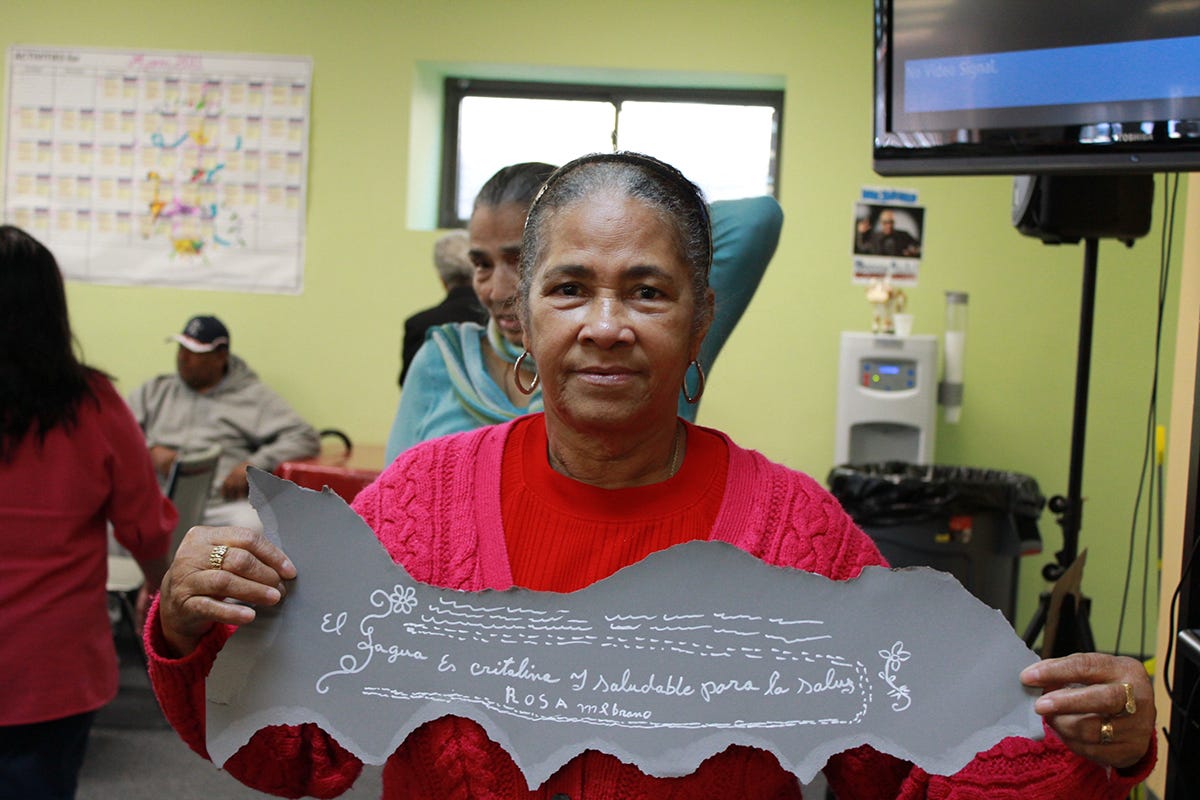
For about ten years I created monumental, public-participation art installations to raise awareness of environmental and social issues. One of the programs was called Stream of Conscience where participants responded to a prompt (depending upon the setting/curriculum/organization partnered with) either written or drawn on torn pieces of cover-weight paper out of which I would create a river.
The prompts were designed to inspire participants to acknowledge and appreciate their personal relationship to water because when we stop taking natural resources for granted, we’re more likely to protect them.
The participants’ creative contributions happened after hearing a presentation about the shrinking availability of clean water, which while intense also promoted agency. To elevate the mood and expand understanding of water’s magical qualities, the call to respond began with the following prose:
STREAM OF CONSCIENCE
The conceptual foundation of the Stream of Conscience is based on a quote from Thich Nhat Hanh, Vietnamese, Buddhist monk.
“We are here to awaken from the illusion of our separateness.”
Often, we feel separate from each other. From our environment. But everything is interconnected. When we talk about “saving the environment,” who are we saving?
If the oceans and the earth’s waterways represent life, each of us is a wave. We rise, crest, roar to the shore, then slip back to join all the other waves that have been or are about to be. For a moment in time, we are distinct. But we are never separate.
The Earth communicates using water in response to our actions. If we listen, we become aware of its vulnerability. Water speaks for the planet. Words speak for us.
Water is the only natural compound that exists in three forms—liquid, solid, and gas. Words can be fluid, adapting to a situation but also insincere. Words can be solid, standing up for a belief but also stubborn and inflexible. And then there’s gas: words can cast a fog over reality or mean nothing or have no weight, but also can lift our spirits.
All of life has emerged from water and all of life needs water to survive. Because of water, the unmanifested becomes. Words give form to our thoughts.
Water can wear down dense rocks. Persuasive language can burnish an opponent’s hard edges. Water follows the path of least resistance, yet always gets to where it’s going.
Water is constantly moving. Our minds are constantly moving. But when water is still, it reflects everything that is true. It’s challenging to still the mind and the only way to see clearly what’s going on.
Through evaporation and rain, water is a mediator connecting the heavens and the Earth. Words, too, mediate differences and connect us to each other.
We like to think that we are solid structures, but the human body is made up of 60 to 70% water. We are not as solid as we think we are. We are constantly changing. We are constantly in motion. There is nothing solid in our existence.
Think of your written contributions as individual drops that when combined, make a powerful river of words. Rushing water generates electricity; your words generate energy. We are inviting you to join us in using words to impact an outcome. We are interconnected just like all these paper waves in Stream of Conscience and all of the water on the planet. Have you forgotten? We are made of water.